FTC sends more than $100,000 to 6,205 GOAT customers: the Mail Order Rule lesson for online sellers
The refunds come from a 2024 order over late shipping and unfulfilled “Buyer Protection” promises. They are a reminder that a delivery promise or protection policy is a commitment a regulator can enforce.

Key points
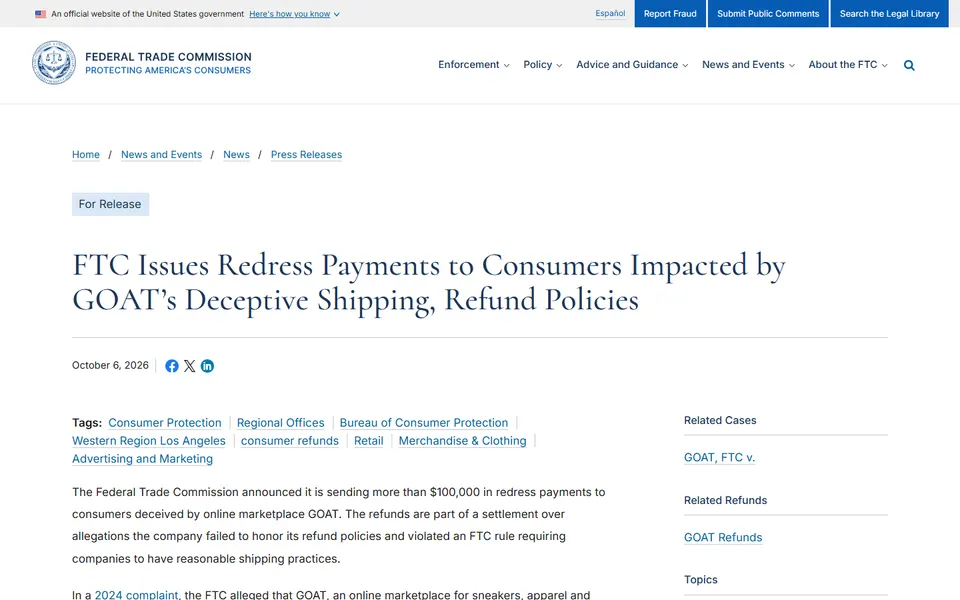
- The FTC announced on 6 October 2026 that it is sending more than $100,000 in redress payments to 6,205 GOAT customers who had not yet received a payment1.
- The FTC alleged GOAT was slow to ship some priority orders without offering buyers the choice to accept the delay or cancel for a prompt refund, as the Mail Order Rule requires1.
- It also alleged GOAT lacked a system to honour its Buyer Protection policy and often denied, partly refunded or gave store credit for authenticity and not-as-described claims1.
- GOAT directly refunded more than $736,000 in 2025 under the same settlement, which Kelley Drye reports required payments of more than $2 million in total1,2.
- Recipients get a check by mail or a PayPal payment; checks should be cashed within 90 days and PayPal payments redeemed within 30 days1.
The Federal Trade Commission announced on 6 October 2026 that it is sending more than $100,000 in redress payments to 6,205 customers of GOAT, an online marketplace for sneakers, apparel and accessories, who had not yet received a payment1. The payments come from a settlement order the FTC announced in December 2024 over how GOAT handled shipping delays and its "Buyer Protection" policy1,2. In 2025 GOAT directly refunded more than $736,000 to affected customers under the same settlement1. Our analysis is that the case is a practical reference for any online seller who sells faster shipping or advertises a protection policy.
What did the FTC allege?
The FTC alleged two failures1.
- Shipping. GOAT was slow to mail some priority processing orders and did not give buyers the choice to accept the delay or cancel for a prompt refund, as required by the Mail, Internet or Telephone Order Merchandise Rule, usually called the Mail Order Rule.
- Buyer Protection. GOAT did not have a system to honour its Buyer Protection policy. It often denied refund requests for products found to be inauthentic, incorrect or not as described, or gave only partial refunds or in-store credit.
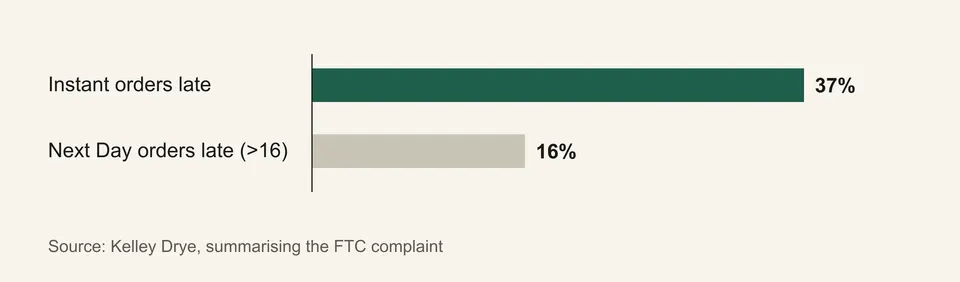
Kelley Drye, summarising the 2024 order, reports that GOAT sold faster shipping for extra fees of $14.50 to $25, and that the FTC alleged 37% of "Instant" orders and over 16% of "Next Day" orders shipped late2. It also reports that GOAT advertised an "Assurance of Authenticity" and "Buyer Protection" but, according to the FTC, often rejected refund requests, offered partial refunds or store credit, and made the process difficult to use2.
What does the Mail Order Rule require?
Kelley Drye summarises the rule in plain terms: a seller needs a reasonable basis for its shipping claims2. If the seller cannot ship by the promised time, or within 30 days when no time was promised, it must notify the customer and offer the option to cancel for a full refund; the rule also specifies what first and later delay notices must contain2. The rule applies to orders taken by internet, so it covers online stores as well as marketplaces.
How are the payments being made?
According to the FTC, most recipients will receive a check by mail and others will receive a PayPal payment1. Check recipients should cash them within 90 days, and PayPal recipients should redeem payments within 30 days1. The refund administrator is JND Legal Administration, which can be reached at 1-888-970-24101. The agency's scam warning is: "The Commission never requires people to pay money or provide account information to get a payment"1.
What are the terms of the order?
Kelley Drye reports that the December 2024 order required GOAT to pay more than $2 million in consumer refunds, barred it from misrepresenting the relief it provides for deficient products, and required certain customer service practices when advertising special product protections2. We have not read the order, and the FTC's October release does not restate its terms1.
What can online sellers learn?
The lessons below combine Kelley Drye's takeaways with our own recommendations2.
- Treat shipping promises as commitments. If you sell "next day" or "instant" delivery for an extra fee, track on-time performance and be ready to show your basis for the claim.
- Send delay notices. When an order will be late, tell the customer and offer a cancellation with a full refund.
- Honour the policies you advertise. A protection or authenticity guarantee needs a working process behind it, with decisions that match the wording.
- Offer the remedy you promised. The complaint criticised partial refunds and store credit where the policy appeared to promise a refund1.
- Monitor complaints across all channels. Kelley Drye advises that complaints can signal problems before they escalate to enforcement2.
What is still unknown?
The October release does not explain how the 6,205 recipients were identified or how much each will receive, beyond the total of more than $100,0001. It does not repeat the total value of the order, which Kelley Drye puts above $2 million1,2. We also did not retrieve any response from GOAT in 2026.
Why do refunds arrive so long after an order?
The order dates from December 2024, and this round of payments follows a direct-refund phase in 20251,2. Redress programmes commonly run in stages: the company refunds the customers it can identify first, then the agency pays the remainder from the settlement fund to the people who have not yet received money. The FTC's release says these 6,205 customers had not yet received a payment, which suggests they are the second group1.
For sellers, the timeline is a reminder that an unresolved customer complaint can return as a regulatory matter long after the sale. The cost of a quick, fair refund today is usually lower than the cost of a dispute that is still being counted two years later.
Questions readers ask
What is the Mail Order Rule?
Kelley Drye summarises it as requiring sellers to have a reasonable basis for shipping claims and, if they cannot ship on time or within 30 days when no time was promised, to notify customers and offer a full refund if they cancel2.
How do I know a GOAT payment is real?
The FTC says the refund administrator is JND Legal Administration and that the Commission never requires people to pay money or provide account information to get a payment1.