FTC settlements with Humboldt and Nuvei: why payment processors are screening online merchants harder
Two payment processors agreed in September to pay a combined $16.85 million and to screen merchants more closely. The orders show what processors look for, and why a legitimate new seller may face more questions.
Key points
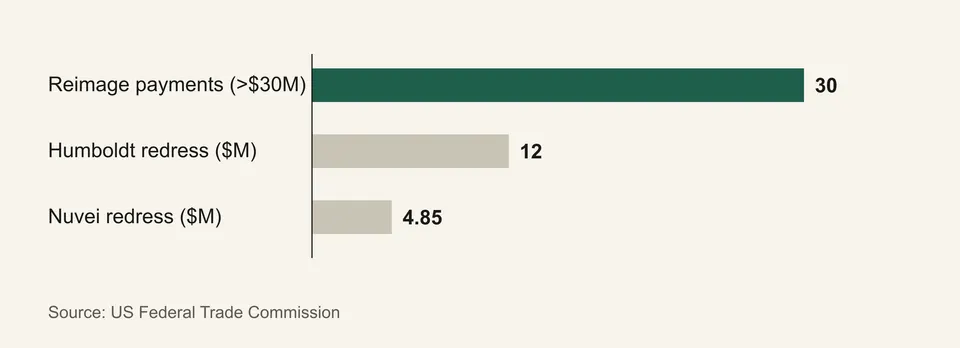
- The FTC announced a $12 million settlement with Humboldt Merchant Services on 8 September 2026 and a $4.85 million settlement with Nuvei on 4 September, both to be paid as consumer redress1,2.
- The FTC alleges Humboldt processed payments for more than 1,000 shell merchants whose chargeback rates were nearly ten times higher than card brands consider excessive1.
- The proposed Humboldt order bars processing for straw companies, merchants on Mastercard’s MATCH list, and e-commerce entities whose only business location is a mailbox provider and that also use negative option billing or are new or lack processing history1.
- The Nuvei order would require screening and monitoring of existing and prospective clients and enhanced investigation of clients whose chargebacks exceed set limits2.
- Both orders are proposed and become enforceable once the courts approve them; the allegations have not been tried1,2.
In the first week of September 2026 the Federal Trade Commission announced settlements with two payment processors. Humboldt Merchant Services will pay $12 million, announced on 8 September, and Nuvei will pay $4.85 million, announced on 4 September, both for consumer redress1,2. The allegations are that each processor opened and kept accounts for merchants that were running scams despite obvious warning signs1,2. Neither case accuses online sellers of wrongdoing. Our analysis is that the proposed orders are useful to read anyway, because they spell out what processors are expected to screen for, and that tells a legitimate seller what questions to expect at onboarding.
What did the FTC allege against Humboldt?
The FTC says Humboldt processed payments for more than 1,000 merchants that were shell entities acting as fronts for fraudulent companies running unauthorised billing scams, including Legion Media, which the FTC shut down in 20241. Chargeback rates on those accounts were allegedly nearly ten times higher than card brands consider excessive1. The agency also alleges that Humboldt moved the accounts onto a lower-risk bank identification number used by an affiliated entity to raise the chance transactions would be approved1.
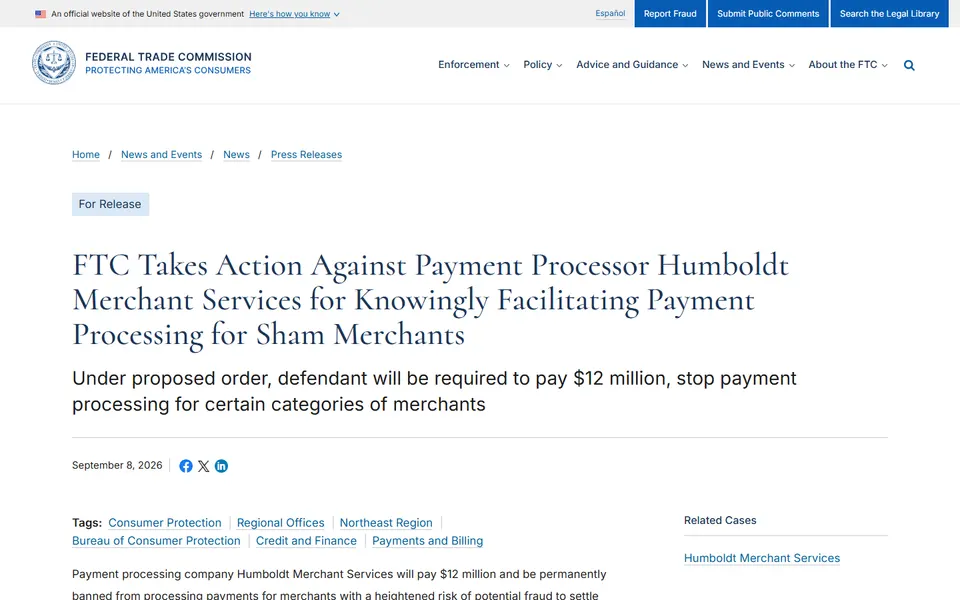
The proposed order, filed in the US District Court for the Eastern District of Michigan, would permanently ban Humboldt from processing for merchants with a heightened risk of fraud, and the Commission voted 2 to 0 to approve it1.
What did it allege against Nuvei?
The FTC says Nuvei opened and maintained accounts for merchants it knew or should have known were engaged in deception, including tech support scams2. It alleges Nuvei processed more than $30 million in consumer payments for Reimage, an offshore tech support scam, between 2017 and 2023, and that its US subsidiary opened accounts for merchants selling business opportunities with false earnings claims, merchants impersonating tax authorities, and merchants that other processors had terminated for excessive chargebacks or fraud2.
What would the orders require?
The two proposed orders overlap on several points, shown below as the FTC describes them1,2.
| Requirement | Humboldt | Nuvei |
|---|---|---|
| No false or misleading information to obtain merchant accounts | Yes | Yes |
| No tactics to evade fraud monitoring, including load balancing | Yes | Yes |
| Screening and monitoring of existing and prospective clients | Not stated in the release | Yes |
| Enhanced review of clients with high chargebacks | Not stated | Yes |
| Category bans | Straw companies, MATCH-listed merchants, merchants under law enforcement action, certain mailbox-address e-commerce entities | Tech support sellers using telemarketing or pop-up messages |
The Humboldt category that matters most to small online sellers is the last one: e-commerce entities that use a mailbox provider, such as a UPS Store, as their only business location and that also use negative option billing or are new or lack processing history1. The FTC's description is a combination test. A mailbox address alone is not banned. It becomes a bar when combined with subscription-style billing or a thin processing record1.
Why does it matter to a legitimate seller?
The sources do not say how processors will respond. Our inference is that processors under orders like these, and others watching, will ask more of new accounts, especially those that match the red flags in the orders. Sellers sometimes experience that as a delayed approval, a reserve held against payouts, or a request for extra documents.
Features the orders treat as risk signals include shell structures with undisclosed third parties, mailbox-only addresses, a lack of processing history, subscription billing, and chargeback rates well above the norm1,2. Most legitimate businesses will have an answer for each, but only if they prepare it.
What should sellers prepare?
These are our recommendations.
- Use a real business address and be able to show it. If you use a mailbox for correspondence, also have a lease, utility bill or fulfilment-centre agreement ready.
- Match your names. The legal name, the bank account name and the website should agree.
- Document who owns and runs the business. Processors want to know that nobody undisclosed is behind the account1.
- Watch your chargeback rate. Respond to disputes promptly, and fix recurring causes such as unclear descriptors and slow delivery.
- Explain recurring billing clearly. If you sell subscriptions, make the terms and cancellation easy to find.
- Do not split volume across accounts to stay under a threshold. Load balancing is one of the practices both orders prohibit1,2.
What is still unknown?
Both orders are proposed and become enforceable only when the courts approve them1,2. The FTC releases do not define MATCH or load balancing, give the specific chargeback limits in the Nuvei order, or say how the orders will change merchant onboarding in practice1,2. We did not read the orders themselves, and we have no evidence from the processors about changes to their onboarding.
Questions readers ask
Do these cases accuse online sellers of anything?
No. They concern payment processors that allegedly served fraudulent merchants1,2. Legitimate sellers are not accused, but processors under order may ask more questions of new accounts, which is our inference.
What is load balancing?
Both orders prohibit "load balancing" as a tactic to avoid fraud and risk monitoring1,2. The press releases do not define it; it is generally understood as spreading transactions across accounts to keep chargeback rates under monitoring thresholds, which is our explanation rather than the FTC’s.
What is a MATCH list?
The Humboldt release refers to merchants on Mastercard’s MATCH list, a listing of merchants that have been terminated by card-acquiring processors1. The FTC release names the list but does not describe how it works.